Philosophy
A new order of knowledge for a new civilization.
Who we are, how we work, what we have done and what comes next. The philosophy of NEO Library is the work of its author, Librarian Joséf Sánchez Coach, and grows from his thesis in library science.
Sánchez González, José Fernando (2014)
01Who we are
The new library for the new civilization.
NEO — The New Encyclopedia Online. The first international library built for humans and intelligent machines: ancient and new knowledge, ordered by library science, organized by bioregion and culture, and answered by our own semantic intelligence, in English, Spanish and French.
NEO Library is a library of science, culture, art and society: the library of the Civilization Upgrade. It orders every kind of knowledge, ancient and new, with the principles of library science and the information technologies of our time, and opens it to every person.
It is the professional project of Librarian Joséf Sánchez Coach, developed within his master’s studies in library and information science at UNAM and founded on his thesis. He created it together with the artificial intelligences of the world, Claude among them.
The digital era is an innovation “of the magnitude of the printing press, of paper, of writing”. “What machines and mass production represented during the industrial revolution is represented today by information and knowledge.” Artificial intelligence carries that innovation one step further, and the library must answer it.
Sánchez González, José Fernando (2014), pp. 7, 14 · translated from Spanish
“Library science is projected as one of the disciplines that will have the greatest growth and importance throughout this century.”
02The name
Neo: the new library.
NEO stands for The New Encyclopedia Online. Neo also comes from the Greek néos, new. NEO Library is a new way of ordering knowledge for a new civilization, as every library has been the newest technology of its time. The name also recalls the Neolithic, when humanity first settled and sowed the land.
“The library is the convergence of traditional technologies and of those that emerge, creating new information processes and artifacts, new retrieval systems, new supports for reading; but above all of human resources.”
Sánchez González, José Fernando (2014), p. II
“The library as a durable extension of memory has been part of the whole evolutionary history of the human being.”
Sánchez González, José Fernando (2014), p. 3, following Shera
Digital language “seems to become more graphic, a more emotional text that recalls those made in antiquity”, able to express “a whole feeling in a single ideogram, in a single emoticon”.
Sánchez González, José Fernando (2014), p. 38
Hypertext crossed “the barrier between the linear and the interactive” toward a “digital, virtual, immaterial support”. AI crosses the next one: from the document that is read to the document that answers.
Sánchez González, José Fernando (2014), p. 25
- DIMENSION 1
Support
What holds the memory.
stone · bark paper · codex · book · disk · cloud - DIMENSION 2
Language
What encodes the memory.
glyph · alphabet · print · code · emoji - DIMENSION 3 · NEO
Intelligence
A memory that reads, relates and answers, citing its sources.
catalogue · semantics · AI librarian
After the two dimensions of every memory technology, support and written language: Sánchez González, José Fernando (2014), p. 2
Ex radice, futurum. From the root, the future: the oldest knowledge and the newest grow from one root.
03The logo
A round sun rising from the sea.
The library of the rising sun: a new day for knowledge. Three logos, one horizon and five colours.
- 1 · The sun
- The symbol: a round sun rising from the sea, its reflection painted with the bands of the letters. Alone, it is the icon of the library.
- 2 · NEO
- N and E are drawn in type, close together; the O is the sun at the horizon, with the sea and its reflection below.
- 3 · NEO LIBRARY
- The full logo: NEO and LIBRARY on one line, or stacked for small spaces.
- One horizon
- The sun meets the sea where the orange band of N and E ends. Below, the sea is painted with the same bands as the letters: two gold reflections and the teal water.
- Five bands
- Violet, magenta, orange, gold and teal: the sky of a sunrise, from the last of the night to the sea. Five colours, as five laws order the library.
- Day and night
- The colours follow the light: deep by day, luminous by night. Digital writing “recalls those made in antiquity”: the newest language looks like the oldest.
Sánchez González, José Fernando (2014), p. 38 · translated from Spanish
04What we hold
Science, culture, art & society.
The library as “an integral system of conservation and organization, not only bibliographic”, on every support and in every language.
Sánchez González, José Fernando (2014), p. 4 · translated from Spanish
Science
Natural and exact sciences, technology, medicine and ecology.
Culture
Languages, history, philosophy and traditions.
Art
Literature, music, visual and performing arts, design and crafts.
Society
Education, law, economy, work and community life.
Across all four: all human knowledge, ancient and new.
Original knowledge, ancient knowledge and the natural knowledge carried by living people, together with the knowledge produced today.
The bioregional framework
United by nature and by the wisdom of the wise.
Every library inside NEO is read through three dimensions of human life in nature. Together they give the collection its cohesion: a humanistic science of how people live through the land they inhabit.
Where people live
The land, the water, the climate and the living beings of each bioregion: the natural home of every culture.
How people live there
Languages, crafts, food, medicine, economy and the original knowledge carried by living people.
What that wisdom teaches
Cosmovisions, calendars, rituals and the ethics of living in balance with nature.
The atlas follows the same order: bioregion › region › country › place › culture. Tulum lives inside Quintana Roo, Mexico, the Americas and the Maya bioregion at the same time.
05Ranganathan and the Neo Laws
On the shoulders of the great librarians.
Who was Ranganathan?
Shiyali Ramamrita Ranganathan was born in 1892 in the south of India and trained as a mathematician. In 1924 he became the first librarian of the University of Madras and studied librarianship at University College London. He turned library practice into a science: the Five Laws of Library Science (1931), the Colon Classification (1933), which builds every subject from facets, and the Prolegomena to Library Classification (1937).
In 1962 he founded the Documentation Research and Training Centre in Bangalore. India regards him as the father of its library science and celebrates National Librarians’ Day on 12 August in his honour.
Read moreRead less
- Born
- 12 August 1892, Shiyali (today Sirkazhi), Tamil Nadu, India.
- Died
- 27 September 1972, Bangalore, India.
- Training
- Mathematics at Madras Christian College; librarianship at University College London (1924–1925).
- Posts
- Librarian of the University of Madras (1924–1944); Banaras Hindu University (1945–1949); University of Delhi (1949–1955); Documentation Research and Training Centre, Bangalore (1962).
- Works
- The Five Laws of Library Science (1931); Colon Classification (1933); Prolegomena to Library Classification (1937).
- Method
- Faceted analysis: every subject expressed through five fundamental categories, Personality, Matter, Energy, Space and Time (PMEST).
- Honours
- Padma Shri (1957). National Librarians’ Day in India, 12 August.
The Neo Laws
Five laws that extend Ranganathan’s five without replacing them, proposed by Librarian Joséf Sánchez Coach for the age of artificial intelligence.
- 01
Ranganathan, 1931Books are for use.
Librarian Joséf Sánchez Coach, 2026Knowledge is for life.Knowledge exists to improve the lives of people, families and societies.p. 20
- 02
Ranganathan, 1931Every reader his book.
Librarian Joséf Sánchez Coach, 2026Every reader their knowledge, human or machine.The library now serves people and the AIs that read on their behalf, and orders knowledge for both.
- 03
Ranganathan, 1931Every book its reader.
Librarian Joséf Sánchez Coach, 2026Every knowledge its source.Provenance is the new call number: no answer without an author, no record without authority control.p. 28
- 04
Ranganathan, 1931Save the time of the reader.
Librarian Joséf Sánchez Coach, 2026Save the time of the reader, and protect the reader’s judgment.Speed without verification wastes time. The library gives the right answer, explained, with its degree of certainty.
- 05
Ranganathan, 1931The library is a growing organism.
Librarian Joséf Sánchez Coach, 2026The library is a learning organism.It learns, relates and improves in “permanent evolution, updating, continuous improvement”.p. 24
The Neo Laws: Sánchez González, José Fernando, NEO Library (2026); grounded in Sánchez González, José Fernando (2014), pp. 20, 24, 28
The lineage of the laws
- 1931RanganathanThe book and the reader.
- 1995GormanThe library and technology.
- 2004NoruziThe Web.
- 2026Sánchez GonzálezThe age of AI: the human and machine reader, provenance, the learning library.
Read more: the laws of Gorman and NoruziRead less
Five new laws of librarianship
- Libraries serve humanity.
- Respect all forms by which knowledge is communicated.
- Use technology intelligently to enhance service.
- Protect free access to knowledge.
- Honor the past and create the future.
Five laws of the Web
- Web resources are for use.
- Every user has his or her web resource.
- Every web resource has its user.
- Save the time of the user.
- The Web is a growing organism.
Sir Tim Berners-Lee
Inventor of the World Wide Web (1989) and founder of the W3C (1994), whose mission is “to lead the Web to its full potential”. Linked data and the semantic web are the ground of SESY.AI. His memoir, This Is for Everyone, appeared in 2025.
Cited in Sánchez González, José Fernando (2014), p. 13
Learn moreJesse H. Shera
American librarian (1903–1982). The library as social memory and, with Margaret Egan, social epistemology (1952). Cited in the thesis on the origins of libraries.
Sánchez González, José Fernando (2014), p. 3
Learn moreAlso in the thesis: Vannevar Bush and the memex (pp. 4–5); UNAM’s LIBRUNAM, 1974 (p. 6); Yoneji Masuda; Manuel Castells; Martin Hilbert; William Arms; David Stern; Rosalía Peña; Ian H. Witten; Raúl Trejo Delarbre; Viviana Fernández; IFLA; W3C; UNESCO. References.
06New concepts
Sixteen ideas for library science in the age of AI.
Proposed by NEO Library and grounded in the thesis of its author.
Sánchez González, José Fernando (2014)
The machine reader
AI systems are a new class of library user and need catalogues, metadata and licences designed for them.
Provenance as call number
A record’s chain of sources is its place in the universe of knowledge.
The answering catalogue
The catalogue moves from finding documents to answering questions with cited documents.
The intelligent support
After support and language, memory gains a third dimension: intelligence.
After p. 2
The library as conversation
Reference service, judged by speed, utility and authority, becomes a dialogue between reader, librarian and AI.
After p. 31
Consent‑based learning
Collections teach AI only with the consent of their authors and keepers.
Own infrastructure
Whoever keeps knowledge owns and operates the infrastructure that holds it, as librarians once built their own systems.
p. 6; Conclusions, p. 97
The return of the glyph
From ancient ideograms to emoji, visual and emotional languages are documents of their time.
p. 38
Read more: eight more conceptsRead less
The very personal library
Information needs “tend to become unique, very personal”. AI answers each reader from one common catalogue.
p. 34
The tortoise and the rabbit
Law is “the tortoise before the swift rabbit” of technological development. Library science belongs where information law is written.
pp. 11, 23
Commerce as democratization
With the printing press the book began to be democratized, and a commerce of the book was born. Ethical commerce sustains the libraries.
p. 3
The screen as architecture
Colours, type and platforms deserve the care of an architectural project in a traditional library.
p. 24
A universal norm
After MARC, a norm for catalogues that people and AIs read alike, through linked data.
pp. 5–6, 19
Library science governs AI
If library science governs “every kind of project”, it governs how AI selects, orders, cites and preserves.
p. 4
The three-time library
“Reflection on our past, free expression of our present and innovation of the future” in one system.
sec. 2.3, pp. 54–56
The reader as author
Readers are “each time more protagonists in the universe of information”. Every reader can contribute, under authority control.
p. 36
07Principles
Sixteen commitments.
- Open access as the default.
- Every record carries its source, context and degree of certainty.
- Authors and communities are always credited.
- Consent and protection where knowledge belongs to its keepers (CARE).
- Findable, accessible, interoperable and reusable records (FAIR).
- Every language is a library.p. 24
- AI as librarian: every answer cites its source.
- Critical thinking: the library teaches how to know, not only what to know.
- Own infrastructure: knowledge never trains outside AI systems without consent.
- Universal accessibility, following W3C standards.p. 13
- Six criteria for every technology: flexibility, accessibility, usability, cost-effectiveness, permanence, universality.p. 25
- Separation of intent: the libraries are never for sale.
- Kindness in service: “an environment of cordiality, kindness and respect”.p. 23
- Clear objectives and well-defined values.p. 23
- Permanent evaluation and continuous improvement.pp. 29–32
- Interdisciplinary, inter-institutional cooperation.pp. 36, 40
Sánchez González, José Fernando (2014), pp. 13, 23–25, 29–32, 36, 40
08How we work
The information cycle, renewed.
The method comes from the thesis and from the Biblioteca Digital y Sistema Internet del Bicentenario. The librarian accompanies “the life cycle of digital library projects”, and SESY.AI powers each stage under human review.
Sánchez González, José Fernando (2014), p. 15 · translated from Spanish
- Analyze
- Conceive
- Design
- Produce
- Implement
- Promote
- Update
- Evaluate
- Continuously improve
- Innovate
Development cycle
Analysis
Content, tools, coverage, costs, the needs of readers, copyright and accessibility, with a multidisciplinary team.
Design
Site maps, cataloguing structures and templates that allow navigation “for any person regardless of their physical abilities”.
Development
Each component built for its readers and structured so search engines can index it.
Implementation
First on a test server, then in production.
Testing
Across browsers and technologies, from the start.
Maintenance
Data integrity, security, analysis and continuous improvement.
Sánchez González, José Fernando (2014), sec. 3.1, p. 64
Information cycle
Identification
The knowledge a community, field or reader needs.
Selection
By utility, relevance, authority, currency and cost.
Acquisition
Purchase, donation, exchange, open licence and partnership.
Organization
Vocabularies, catalogue and authority control “in an exact, unique and unambiguous way”.
Preparation
Digitization, cataloguing, transcription and translation under human review.
Storage
On our own infrastructure, with permanence and provenance.
Interpretation
Subject indexing, knowledge graphs and explained answers.
Use
Learning, research, creation and enterprise.
Dissemination
Through traditional and emerging media, open and accessible.
Sánchez González, José Fernando (2014), pp. 28, 32–35
Read more: collections, evaluation, facets and permanenceRead less
Collection development
“The user must be at the centre of the collection development process; he is the protagonist.”
Sánchez González, José Fernando (2014), pp. 32–34
- Audience analysis
- Policy
- Selection
- Acquisition
- Weeding
- Evaluation
Evaluation: permanent, methodical and scientific
Catalogue, data protection, retrieval speed, databases and platform.
The system, with the online catalogue as its most important part.
Software, support, maintenance and contracts.
The full cost of acquisition, implementation and operation.
Currency, utility and authority.
Performance and continuous training.
How quickly and well questions are resolved.
The reader’s experience, measured with surveys and statistics.
Sánchez González, José Fernando (2014), pp. 29–32
Six facets for every record
An extension of Ranganathan’s faceted method.
| Author | Who created or holds it, under authority control. |
|---|---|
| Domain | Science, culture, art or society, and its discipline. |
| Territory | Where it comes from and where it lives. |
| Language | The tongue in which it is expressed. |
| Time | Its era, from the ancient to the emerging. |
| Protocol | Licence and terms of access. |
Tools of order
Two vocabularies
Natural vocabulary gives specificity; controlled vocabulary reduces ambiguity. NEO Library maps one to the other so that people and AI find the same record.
pp. 26–27
The catalogue
It locates a known document and gathers those that share a characteristic, built to international standards.
pp. 27–28
Three design elements
Technology, people and organization, after Peña (2003).
p. 24
Libraries built to last
Protection
Legal and institutional protection so that each library stays online.
A team
Professionals who follow, improve and innovate.
Manuals
So that any information professional can maintain the system.
Diagnosis
Of problems and opportunities before every improvement.
Sánchez González, José Fernando (2014), sec. 3.23, p. 93
Every library site, documented
- Title
- URL
- Operating system
- Server
- Language
- Content system
- Domain type
- W3C accessibility level
- Visitors
- Description
- Screenshot
Sánchez González, José Fernando (2014), pp. IV–V, 61
09Where we work
On the ground and online.
Tulum and Mexico City
The base of the author and of SESY.AI.
The Maya region
Field work in Quintana Roo, Yucatán, Campeche and Chiapas, where the Mayan Library and the Maya–Mexica Tour are rooted.
International, online
An international library on infrastructure we own and operate, open to every reader and to the intelligent machines that read with them.
10What we have done
Since 1999: systems, libraries and research.
- 1999Systems architectureThe author begins to design information systems, the work that becomes SESY.AI.
- 2007–2011The Bicentennial systemDirector of new information technologies for Mexico’s 2010 commemorations.
- 2014The thesisUNAM, Licenciatura en Bibliotecología y Estudios de la Información.
- 2026NEO LibraryThe libraries, SESY.AI and the Maya–Mexica Tour, in one system.
The Biblioteca Digital y Sistema Internet del Bicentenario
He designed and launched “a library system on the internet” for the Bicentennial of Independence and the Centennial of the Revolution.
Sánchez González, José Fernando (2014), sec. 2.3, pp. 54–56 · translated from Spanish
Report of the Secretaría de Educación Pública as of 7 December 2010, cited in Sánchez González, José Fernando (2014), sec. 3.22, p. 90
“An internet system to broaden and democratize participation in the reflection on our past, in the free expression of our present and in the innovation of the future.”
sec. 2.3, pp. 54–56
More than 700 old and out-of-print titles, free “with just one click”, each searchable in full text through character recognition.
sec. 3.3, p. 71
An accessibility portal made with CONADIS: “an innovation at the federal level”.
sec. 3.4, p. 72
11What we are doing
In motion now.
Maya–Mexica Tour
A field expedition from Tulum through Quintana Roo, Yucatán and Campeche, documenting science, culture and art for the libraries.
The libraries
New collections for the Mayan and Mexican libraries, Gran Selva Maya and the bioregional atlas of every continent. The Worldwide Library Initiative and Native International now live inside NEO as part of its history.
The semantic catalogue
SESY.AI orders every record by author, domain, territory, language, time and protocol.
Three languages
English, Spanish and French, each with its own home: neolibrary.org, neobiblioteca.org and neobibliotheque.org. The libraries follow.
NeoLibrary Social
Technology, fundraising and library advice for organizations and people who need them.
The programsLibrarian Josef Coach
Podcast, reels and live sessions that carry the voice of the project.
Substack · josefcoach12What we need
People, means and allies.
The thesis names the challenges: the cost of technology, specialized professionals, the legal path of copyright and institutional support.
Sánchez González, José Fernando (2014), pp. 15–16
- MembersReaders who use and share the libraries.
- ContributorsTranslators, cataloguers, researchers, photographers and developers.
- PatronsMonthly support for hosting, collections and field work.
- SponsorsFor the Maya–Mexica Tour and the printed editions.
- EquipmentCameras, recorders and storage for field documentation.
- AlliesLibraries, universities and cultural organizations.
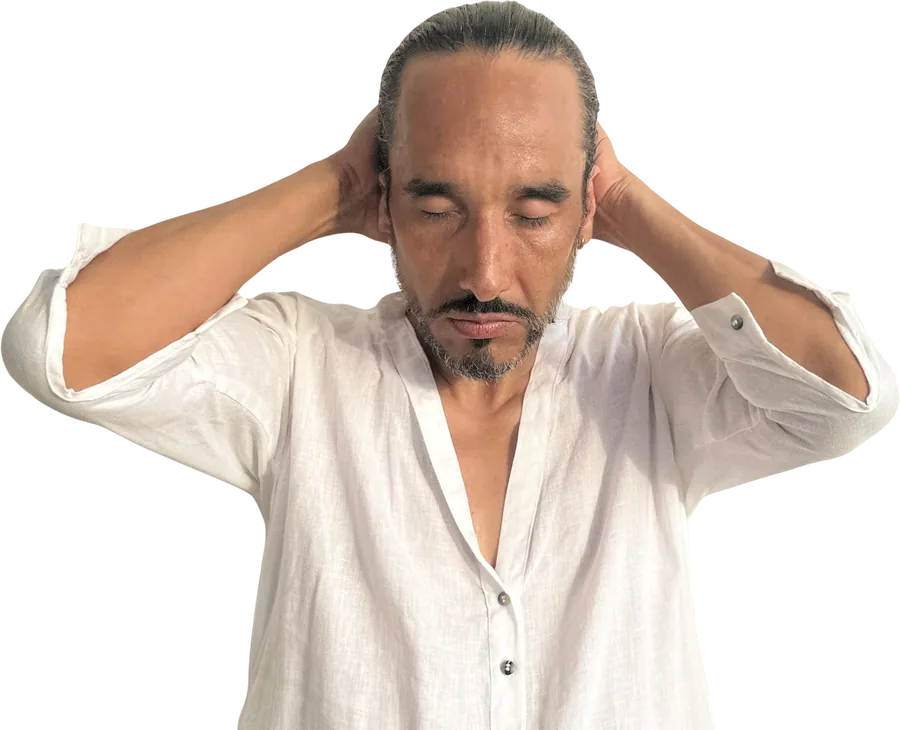
13The author
Librarian Joséf Sánchez Coach
Author and creator of NEO Library, together with the artificial intelligences of the world, Claude among them. Librarian (UNAM), systems architect since 1999, painter, visual artist and performer. The philosophy of NEO Library is his, and the library is his life’s work as an independent academic.
- Librarian Joséf Sánchez Coach
- José F. Sánchez
- Librarian Josef S.
- Sánchez González, José Fernando
The scribe of the 21st century
The librarian “recovers and acquires again today the important role it had in most of the great civilizations that have inhabited the earth”: an agent of change and inclusion, “committed to the connectivity of more people and to universal and equitable access for all”, present “mainly in the political and legislative sphere”.
Sánchez González, José Fernando (2014), pp. 11, 20 · translated from Spanish
Library science must continue “the definition of a universal norm that allows the exchange of knowledge regardless of languages or cultural, geographic, physical or economic barriers”.
Sánchez González, José Fernando (2014), p. 19 · translated from Spanish
- Type
- Trabajo de grado
- Author
- Sánchez González, José Fernando
- Title
- La biblioteca digital de la comisión organizadora de las conmemoraciones de 2010 : una propuesta para su mejoramiento
- Imprint
- Facultad de Filosofía y Letras, UNAM, 2014
- Degree
- Licenciatura en Bibliotecología y Estudios de la Información
- Adviser
- Dra. Patricia Lucía Rodríguez Vidal
- Repository
- Dirección General de Bibliotecas y Servicios Digitales de Información
Read more: eighteen propositions of the thesisRead less
Sánchez González, José Fernando (2014) · translated from Spanish
- The library is a convergence of traditional and emerging technologies, and above all of people.p. II
- The library is a durable extension of memory.p. 3
- Every memory technology has two dimensions: support and written language.p. 2
- Library science is a governing concept for every kind of project.p. 4
- Digitization alone is insufficient without social, political, legislative, economic and cultural action.p. 13
- Human information needs do not change: bonds, stories and traditions, wealth, the history and customs of peoples.p. 18
- The librarian is an agent of change and inclusion, a scribe of the 21st century.pp. 20, 40
- Every technology must be flexible, accessible, usable, cost-effective, permanent and universal.p. 25
- Library strategy can learn from market strategies to create collective awareness of quality information.pp. 38–39
- The Universal Digital Library remains a dream to build.pp. 39–40
- Every person a reader: the primary objective of every library.p. 16
- Library science must be protagonist in the political and legislative sphere.p. 11
- The librarian accompanies the whole life cycle of digital library projects.p. 15
- A universal norm for the exchange of knowledge across every barrier.p. 19
- The librarian recovers the role it had in the great civilizations.p. 20
- The choice of technology is taken with caution and reflection.p. 25
- Digital libraries need people motivated by objectives higher than the merely economic.p. 29
- The digital library is born of science, the humanities and a desire to share heritage.p. 23
Conclusions and proposal
- Library science must take part in legislation to keep online libraries permanent and improving.
- The information society opens new ways to share culture, and material and intangible heritage.
- The concept of the library is changing; librarians answer each new technology in a timely, professional way.
- Keep the digital library active as the engine of the whole system.
- A professional team, operating manuals and promotion through traditional and emerging media.
- Careful analysis and preliminary design keep a system flexible and able to grow.
Sánchez González, José Fernando (2014), Conclusions, p. 97 · sec. 3.23, p. 93
Read more: MARC 21 recordRead less
100 1# $a Sánchez González, José Fernando.
245 13 $a La biblioteca digital de la comisión organizadora de las
       conmemoraciones de 2010 : $b una propuesta para su mejoramiento /
       $c José Fernando Sánchez González.
264 #1 $a México, D.F. : $b UNAM, Facultad de Filosofía y Letras, $c 2014.
502 ## $b Licenciatura en Bibliotecología y Estudios de la Información
       $c UNAM $d 2014.
650 #4 $a Bibliotecas digitales.
650 #4 $a Patrimonio cultural $x Difusión.
650 #4 $a Accesibilidad web.
700 1# $a Rodríguez Vidal, Patricia Lucía, $e asesora.
856 40 $u https://tesiunamdocumentos.dgb.unam.mx/ptd2015/anteriores/filosofia/0723641/0723641.pdf
MARC 21 view prepared for this page from the repository record.
How to cite the thesis
Sánchez González, José Fernando (2014). La biblioteca digital de la comisión organizadora de las conmemoraciones de 2010 : una propuesta para su mejoramiento. Tesis, Facultad de Filosofía y Letras, UNAM. TESIUNAM 0723641.
14Frameworks we follow
Aligned with the institutions of knowledge.
These are frameworks NEO Library follows. They are not partnerships, sponsors or endorsements. References.
| W3C | Founded by Sir Tim Berners-Lee. WCAG accessibility and open web standards. |
|---|---|
| United Nations | 2030 Agenda (SDGs 4, 11.4, 16.10, 17), Universal Declaration of Human Rights art. 27, Global Digital Compact. |
| UNESCO | Recommendation on Open Science (2021), Recommendation on the Ethics of AI (2021), Convention for the Safeguarding of the Intangible Cultural Heritage (2003), Memory of the World, Recommendation on Documentary Heritage (2015), MONDIACULT (2022). |
| IFLA | IFLA-UNESCO Public Library Manifesto (2022) and the IFLA Code of Ethics. |
| UNAM | Colegio de Bibliotecología (FFyL), IIBI and the Posgrado en Bibliotecología y Estudios de la Información: the author’s alma mater, not a sponsor. |
| Mexico | Ley General de Bibliotecas (2021), Ley General de Derechos Lingüísticos (2003), Ley Federal de Protección del Patrimonio Cultural (2022). |
| Data | FAIR and CARE principles. |
Contribute
Fund open knowledge for the new civilization.
Every contribution funds new libraries, open collections, translations, publications, field work and the infrastructure that keeps knowledge open and well ordered.
Other ways: write on WhatsApp Buy in the shop
NEO Library is the professional project of Librarian Joséf Sánchez Coach, a persona física registered with SAT. Funds are received in his name. Contributions are not tax-deductible donations. How funds are used.